
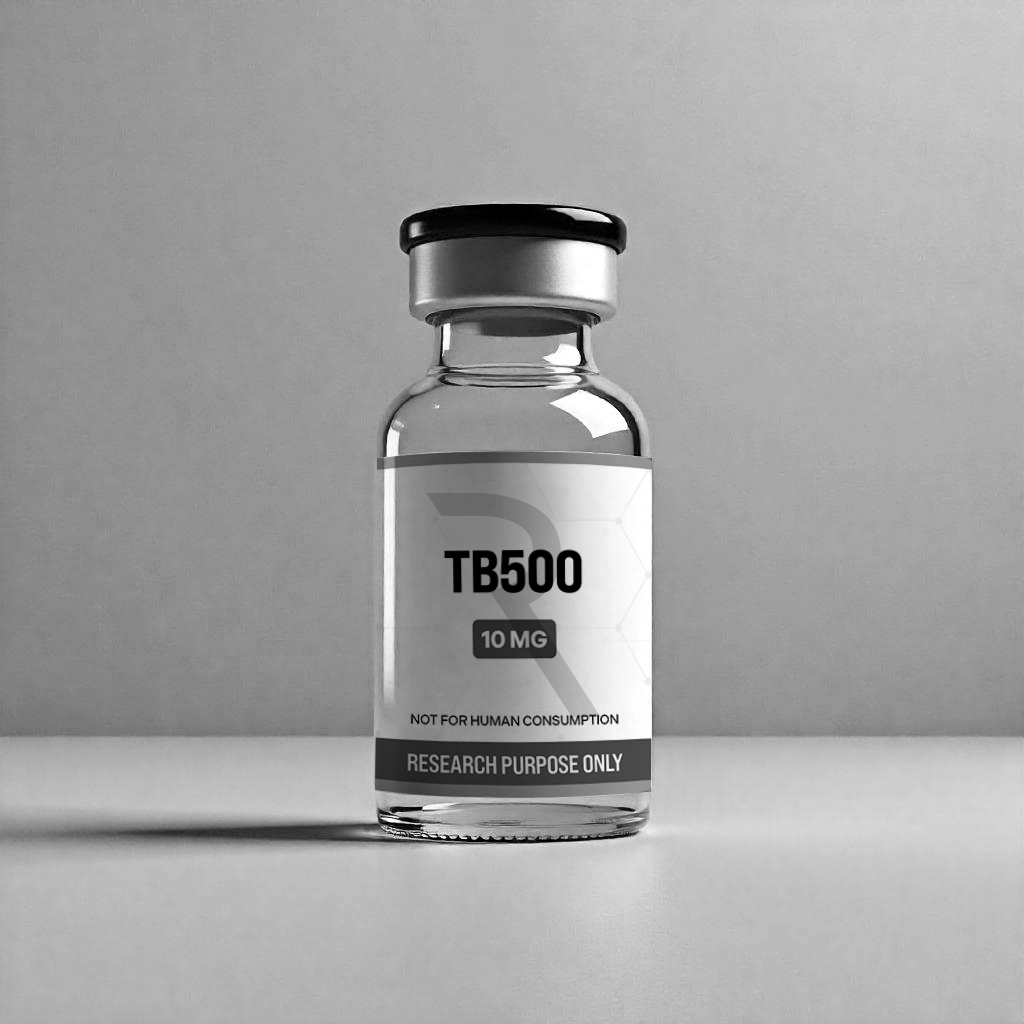


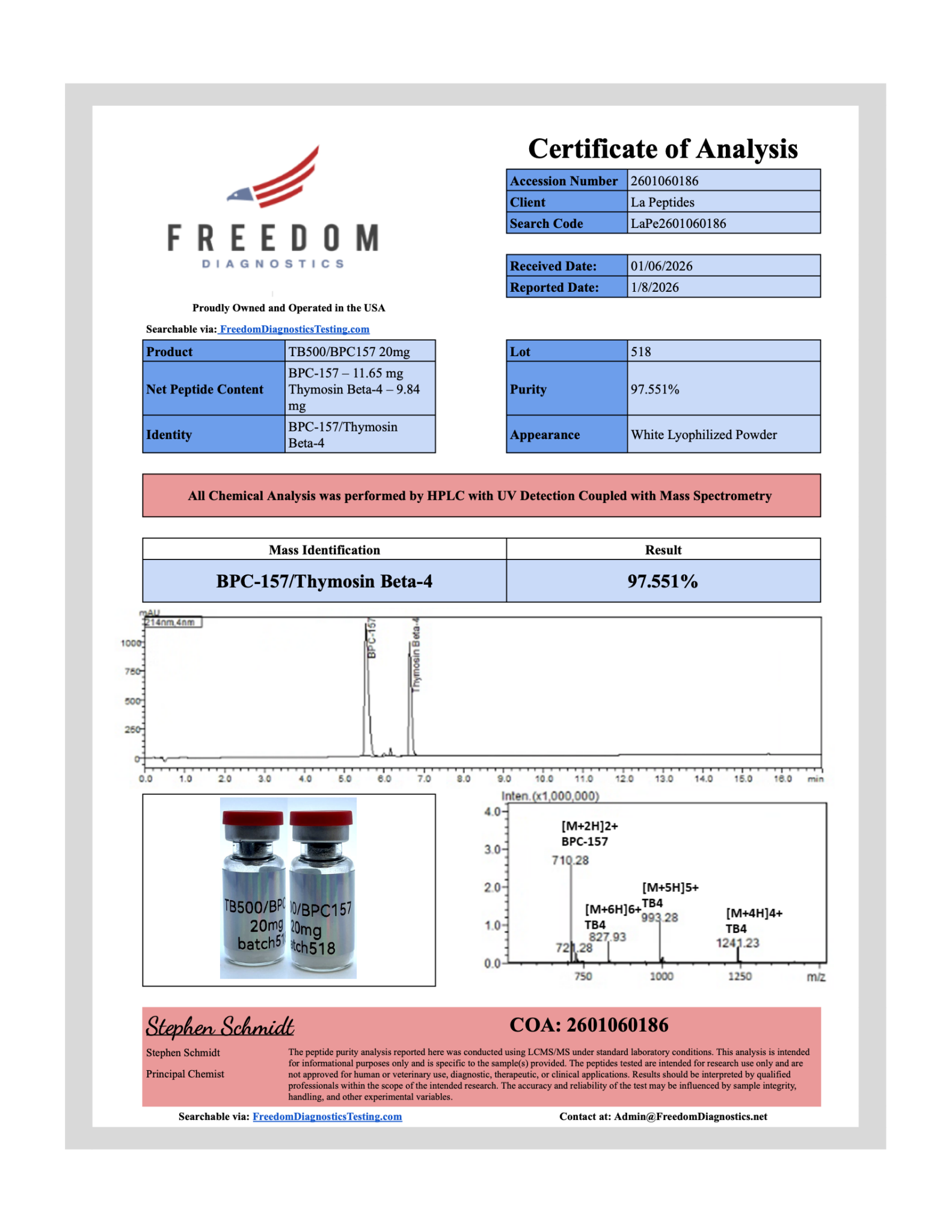
TB500
$79.99
Free Shipping on orders over $200
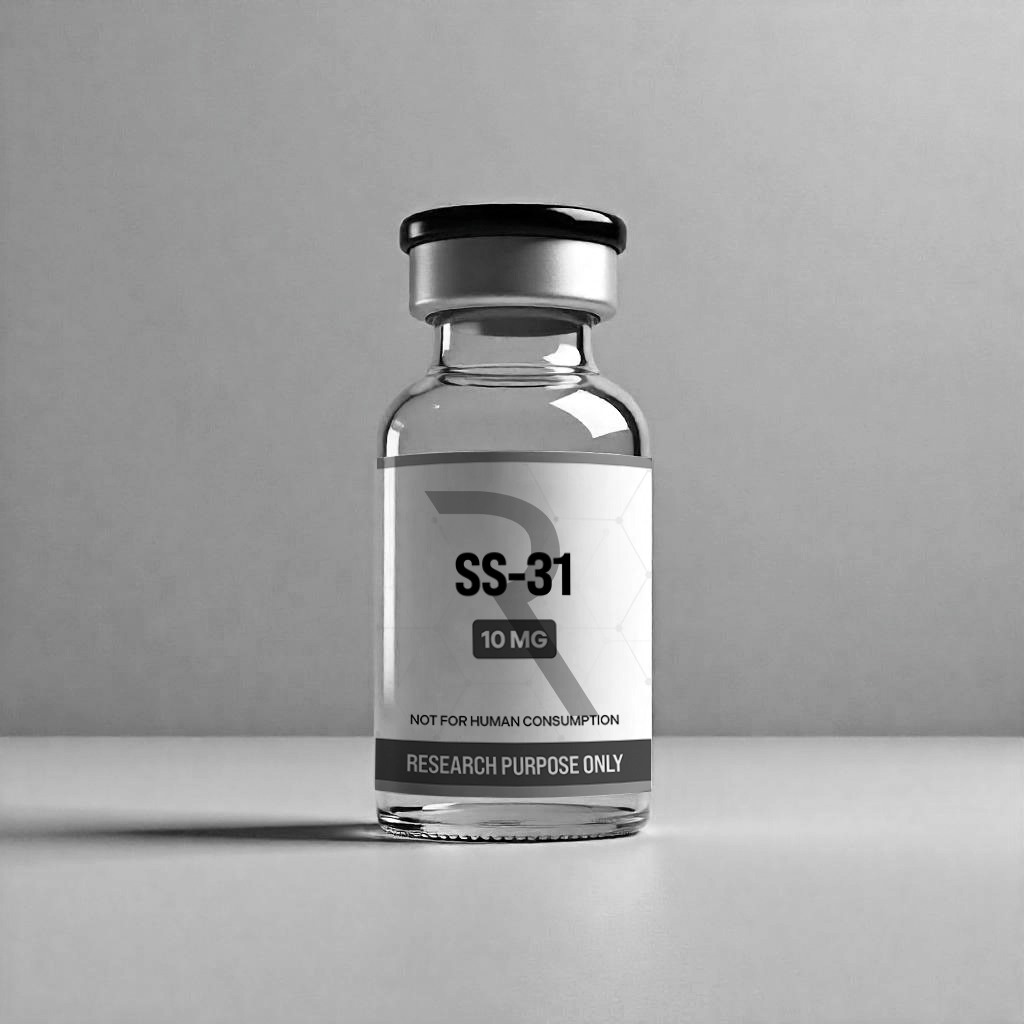
Selank: Research Applications and Mechanisms
PubChem CID : 9943130Selank was developed by modifying the structure of tuftsin, a naturally occurring immunomodulatory peptide. The result is a longer-acting, more stable compound that retains both neuroactive and immunotropic properties. Research surrounding Selank focuses on its regulation of cytokines, brain monoamines, and GABAergic activity.
1. Neurotransmitter System and Anxiolytic Pathways
- In rodent studies, Selank has been shown to increase serotonin and dopamine levels in the hippocampus and frontal cortex [1].
- These changes have been linked to its interaction with GABA-A receptors, suggesting that Selank may enhance GABAergic transmission indirectly [2].
2. Immune Modulation and Cytokine Research
- In vitro experiments on human peripheral blood cells show that Selank modulates levels of interleukin-6 (IL-6) and tumor necrosis factor-alpha (TNF-α) [3].
- Animal studies support its role in balancing Th1/Th2 responses, indicating potential in models studying immune homeostasis [4].
3. Cognitive Function and Neurotrophic Factor Studies
- Repeated administration in rodent models resulted in increased BDNF expression in the hippocampus and prefrontal cortex [5].
- These results have been used to examine Selank’s effect on learning, memory formation, and synaptic modulation.
4. Stress Adaptation and HPA Axis Research
- It has demonstrated the ability to normalize corticosterone levels in stressed rodents and stabilize ACTH secretion during experimental challenges [6].
- Research has indicated its ability to blunt stress-induced monoamine imbalances in multiple brain regions.
Referenced Citations
- Zozulya AA, et al. “Effect of Selank on the content of monoamines in the brain structures of rats.” Bulletin of Experimental Biology and Medicine, 2006. – PubMed
- Seredenin SB, et al. “Selank and its interaction with GABA-A receptors: a neurochemical study.” Neuroscience and Behavioral Physiology, 2009. – PubMed
- Guseva MV, et al. “Effect of the peptide Selank on cytokine production in human whole blood cells.” Bulletin of Experimental Biology and Medicine, 2005. – PubMed
- Andreeva LA, et al. “Immunomodulatory activity of Selank in experimental models.” Immunology Letters, 2008. – PubMed
- Zozulya AA, et al. “Selank increases BDNF expression in rat hippocampus.” Neuroscience Letters, 2010. – PubMed
- Kudrin VS, et al. “The peptide Selank normalizes stress-induced changes in the HPA axis of rats.” Journal of Neurochemistry, 2007. – PubMed
Product Usage:
This product is meant only for research use. It is made for lab testing and in vitro experiments (outside a living body), not for use in people or animals. All information on this website is for learning purposes only. Bodily introduction of any kind into humans or animals is strictly forbidden by law. It should only be used by trained professionals in a proper lab setting. This product is not a medicine, food, or cosmetic, and must not be sold or used as one.